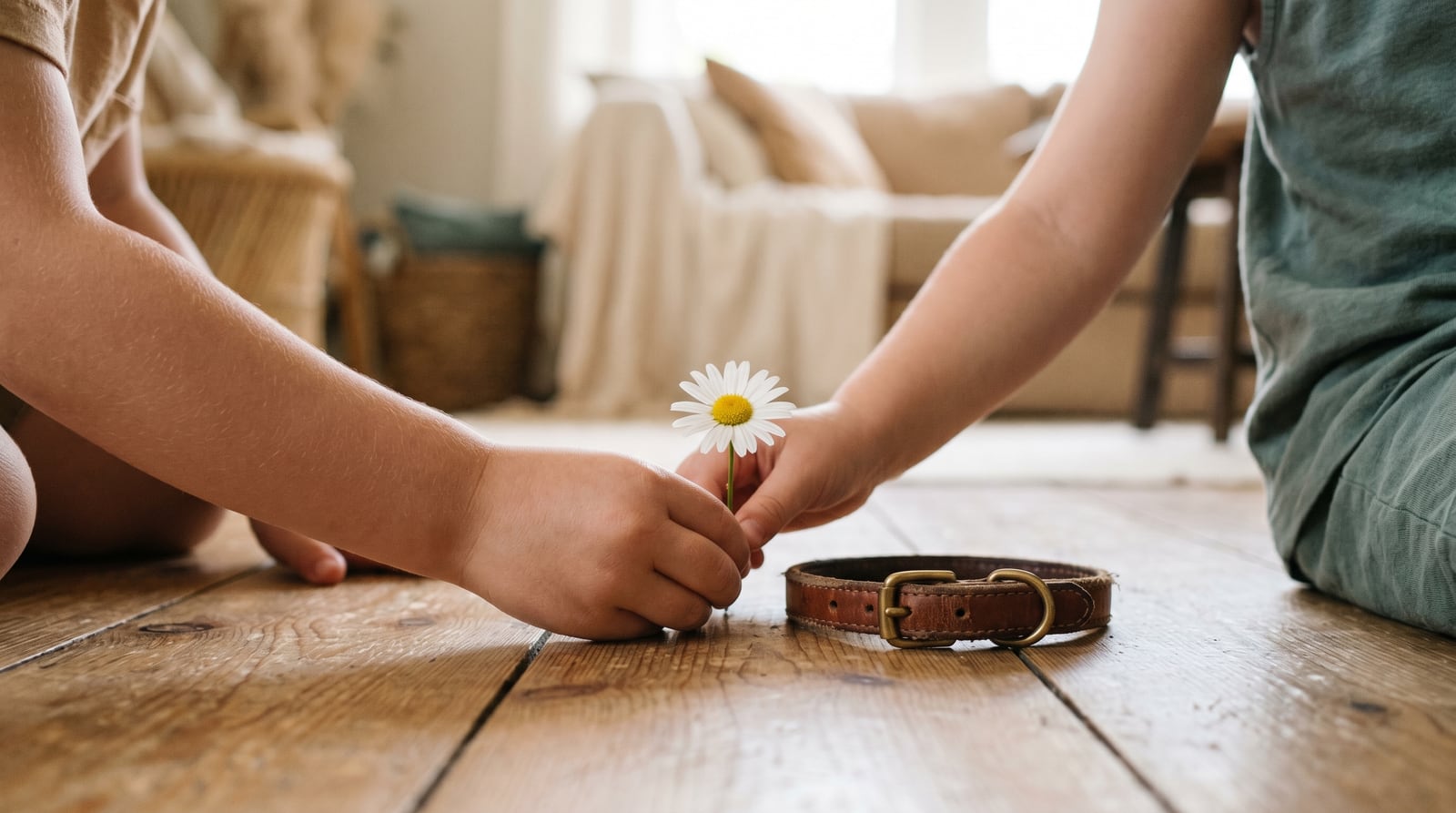
In short: To help a child cope with the loss of a pet, use honest, simple language (say “died” rather than “put to sleep” or “gone away”), reassure them it is not their fault, let them see and share their feelings, and involve them in a goodbye such as a drawing, letter or small memorial. Children grieve in bursts, so patience and openness matter more than having perfect answers.
For many of us, a family pet is woven into a child's earliest memories, and losing one can be their very first experience of grief. Helping children with pet loss asks a great deal of parents, who are often quietly heartbroken themselves. There is no perfect script, but there are gentle, honest ways to walk through it together. At Adelaide Pet Cremation we meet many families with young children, and we know how tender this time can be.
Below are some thoughts to help you support your child, drawn from the experiences of the many Adelaide families we care for.
Explaining pet death to a child honestly
It can be tempting to soften the truth, but gentle honesty usually helps children most. When explaining pet death to a child, simple and clear words tend to land more kindly than well-meaning phrases that can confuse. Saying that a pet has died, and that their body has stopped working and will not come back, is easier for a young mind to hold than language about sleep or going away, which can leave a child anxious or waiting.
Use your pet's name, and let your child ask questions in their own time. It is perfectly fine to say you feel sad too. Seeing a parent grieve openly teaches a child that their own big feelings are safe and normal.
Understanding children and grief
Children and grief do not always look the way adults expect. A child may cry one moment and play happily the next, or seem unaffected before asking a difficult question days later. This is normal. Younger children, in particular, often grieve in short bursts.
Some signs your child may be working through their feelings include:
- Asking the same questions about death again and again.
- Becoming clingy, quiet, or unusually upset over small things.
- Drawing pictures of the pet or wanting to talk about memories.
- Worrying about whether other family members or pets might die.
Meeting these moments with patience and reassurance, rather than trying to fix them, gives your child room to process the loss at their own pace.
Talking to kids about a pet dying at different ages
How much a child understands depends a great deal on their age. Talking to kids about a pet dying works best when your words match where they are. Very young children may not grasp that death is permanent and may need gentle reminding. Primary-school children often want to understand the practical details, including what happens to their pet's body. Older children and teenagers may grieve deeply but privately, and may prefer to talk on their own terms.
Whatever their age, let your child take the lead. Answer the questions they actually ask, rather than offering more than they are ready for, and keep the door open for more conversations later.
Answering the difficult questions children ask
Children have a way of asking the very questions adults find hardest to face, often at the most unexpected moments. A child might ask whether the pet was frightened, whether it hurt, whether it was somehow their fault, or what happens to their pet's body now. These questions can catch you off guard, especially while you are grieving too, but they are a healthy sign that your child is trying to make sense of the loss.
It is always alright to answer simply and honestly, and equally alright to say you do not know. Reassuring a child that the pet was loved, was kept comfortable, and that nothing they did caused the loss can lift a quiet weight they may be carrying without saying so. If a question touches on something you find painful, it is fine to pause, take a breath, and come back to it later. What matters most is that your child feels heard rather than hushed.
Many families find that children take comfort in knowing their pet will be cared for gently after death. When a child understands, in simple terms, that their pet is being looked after with kindness, it can ease some of the worry behind their questions. If your child asks where their pet has gone, you might gently explain that families have a special, caring way of saying goodbye, and that the pet is being treated with love.
Including children in saying goodbye
Many families find that letting children take part in a small farewell helps them feel less powerless. This might be a quiet goodbye before the pet is collected, drawing a picture, or choosing a favourite blanket or toy to send with them.
When the time comes to think about arrangements, you do not need to manage everything alone. We offer gentle collection and individual or communal cremation, and for families who choose individual cremation, the ashes are returned with a paw-print keepsake. Many children find real comfort in a keepsake they can hold and keep.
Helping children with pet loss through small rituals
Children often understand love and loss best through doing rather than talking, and a simple ritual can give shape to feelings they cannot yet put into words. A farewell does not need to be elaborate to be meaningful. Lighting a candle at dinner, sharing a favourite story about the pet, or saying goodnight to a photograph can all help a child feel that their love still has somewhere to go.
Some gentle ideas that families have found helpful include:
- Holding a small family gathering to share favourite memories of the pet.
- Letting your child choose a special spot in the garden to remember them.
- Keeping a photo where your child can see it and talk to it when they wish.
- Writing or drawing a goodbye message together to keep or to place with a keepsake.
- Marking the pet's birthday or a special anniversary in a small, comforting way.
Rituals like these reassure a child that it is good to remember, and that grief, even a child's grief, is something that can be carried together rather than alone.
Creating a memorial together
Remembering a pet as a family can be a healing part of grief for children. Making something together gives sorrow a gentle shape and keeps happy memories close. You might:
- Plant a tree or flowers in the garden in your pet's memory.
- Create a small memory box with photos, the collar and a favourite toy.
- Draw pictures or write a letter to the pet together.
- Choose a special place to keep the ashes or a memorial keepsake.
These small rituals tell a child that love does not simply end, and that it is good to remember.
Looking after yourself too
Supporting a grieving child while grieving yourself is genuinely hard. Be gentle with yourself, and lean on others when you can. Our guide on coping with the loss of a pet offers comfort for the whole family, and our pet loss support page gathers further gentle resources for grieving households across Adelaide.
If your child is struggling more than you expected, or grief is affecting sleep, school or daily life over time, your family doctor can point you towards further support.
When there is another pet at home
Grief rarely affects only the people in a household. If you have another pet, your child may notice that the surviving animal seems unsettled, searches for their companion, or behaves a little differently for a time. Animals do form attachments, and a change in the household can affect them too. This can be confusing for a child who is already trying to make sense of loss, and it can also become a gentle opportunity to talk about how everyone, including pets, feels sad when someone they love is gone.
Reassuring your child that the remaining pet is safe and being cared for, and keeping comforting routines as steady as you can, helps the whole household settle. Children often feel a quiet sense of purpose in helping to look after another animal, and that small responsibility can be soothing in the midst of grief.
Letting children grieve in their own way
Perhaps the most important thing to remember is that there is no single right way for a child to grieve, just as there is none for an adult. Some children will want to talk endlessly, others will fall quiet, and some will express their feelings through play, drawing, or sudden questions at bedtime. All of these are healthy. Your role is not to take the sadness away, which you cannot do, but to walk beside your child as they feel it, and to show them that they are loved and held while they do.
Be patient with the way grief comes and goes, sometimes long after you imagined it had eased. A child may speak of a pet they lost years earlier with fresh tears or fresh smiles, and that is simply love finding its voice again. Helping children with pet loss is, in the end, less about having the perfect words and more about being a steady, gentle presence they can return to.
We are here for your family
However your family is feeling, you are not alone in this. If you have questions or simply want to talk through what happens next, you are warmly welcome to get in touch on 0468 060 402. As a family-owned, local service with an after-hours line, we are here for the quiet, hard moments too, and we will always treat your family and your pet with care.